
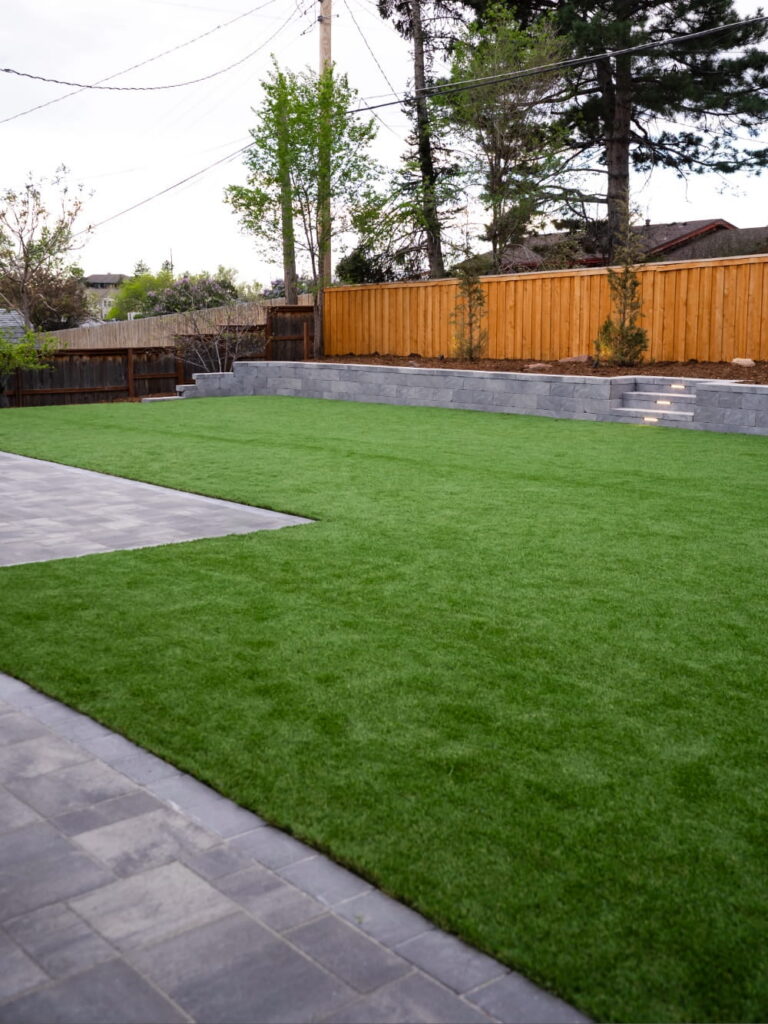
Keeping a traditional lawn green along the Front Range can feel like an expensive weekend job that never ends. Dry stretches expose weak irrigation coverage, heavy use creates bare spots, and a few hot afternoons can undo weeks of watering. Artificial turf in Denver offers another option: a clean, usable lawn without constant mowing, fertilizing, patching, or sprinkler scheduling.
Westside Grounds has served Denver-area homeowners from its Lakewood base since 1999. We install artificial turf for projects of all sizes, from small dog runs and side yards to full lawn replacements. Our team of artificial turf installers in Denver considers drainage, grade, pets, foot traffic, and nearby surfaces so the finished area looks natural and performs as it should.
Contact Westside Grounds to discuss your yard, compare turf options, and get a free quote for professional installation in Denver or Lakewood.
What Is Denver Artificial Turf?
Artificial turf is a synthetic grass surface installed over a prepared base that helps keep it level and allows water to drain. It includes grass-like fibers, a backing, and infill that supports the blades and helps the surface feel more natural.
Turf products differ in softness, thickness, durability, drainage, and heat resistance. The best option depends on whether the area will be used by pets, children, or for general lawn space.
How Does Artificial Turf Installation Work?
Artificial turf installation in Denver should be planned around the property, how the space will be used, and the conditions that affect long-term performance. A careful installation process helps the finished surface look natural, stay secure, and withstand regular use:
- Evaluate the site. We measure the area and study how water moves through the yard. We also identify irrigation lines, utilities, tree roots, access limitations, and transitions to concrete, beds, fences, or steps.
- Plan the layout. The design accounts for blade direction, roll widths, curves, seams, and intended use. Careful planning reduces waste and creates a consistent appearance from the home, patio, and street.
- Remove existing material. Grass, roots, soil, and loose material are excavated to create room for the base. Sprinkler heads may need to be capped or relocated while irrigation serving trees and planting beds remains available.
- Build and compact the base. Aggregate is graded and compacted to form a stable surface. Proper slope and drainage are especially important near foundations, patios, retaining walls, and areas that already collect rain or snowmelt.
- Fit and secure the turf. The turf is positioned, trimmed, seamed, and secured around the perimeter. Detailed cutting may be needed around curved beds, pavers, posts, and drains.
- Add infill and groom the fibers. Infill supports the blades and can affect cushioning, pet performance, and surface temperature. The turf is brushed so the fibers stand properly and the material settles evenly.
We finish by checking drainage, seams, transitions, and the overall appearance. A good installation should feel integrated with the landscape rather than sitting on top of it.
What Are the Benefits of Switching from Natural Grass to Artificial Turf?
Artificial turf in Denver can solve several recurring lawn problems, but its greatest value lies in improving how the yard functions. Benefits include:
- Lower water usage. Artificial turf does not need regular watering, which can reduce outdoor water use during Denver’s dry summers.
- Cleanliness. Artificial turf does not develop the same muddy areas or bare patches that often form in heavily used natural lawns.
- Durability. It can work well in play areas, pet spaces, side yards, and other parts of the property that receive regular foot traffic.
- Consistent appearance. Artificial turf stays green without becoming dormant, developing brown spots, or requiring sections to be replaced with new sod.
Also, unlike natural grass, artificial turf requires low maintenance to stay clean and attractive. Occasional debris removal, brushing, and pet-area cleaning can help maintain its appearance and performance over time.
FAQs
How Much Does Artificial Turf Installation in Denver Cost?
An artificial turf cost estimate in Denver often ranges from $15 to $25 per square foot, depending on the size of the area, site preparation, drainage needs, access, and the turf selected. Higher-quality products and more complex installations can cost more, with premium artificial grass reaching $60 per square foot in some projects. An on-site evaluation provides the most accurate estimate for your yard.
Does Artificial Turf Get Too Hot to Use in Denver Summers?
Artificial turf can become much hotter than natural grass in direct summer sun. Research has documented synthetic turf surface temperatures well above the surrounding air temperature, so heat should be treated as a design and use consideration.
Shade, lighter products, suitable infill, and a brief rinse can help, but homeowners should test the surface before children or pets use it on hot afternoons. West-facing yards and unshaded spaces may be more comfortable in the morning or evening. Compare products for their intended use, not just softness in a showroom.
How Long Does Artificial Turf Last in Colorado’s Climate?
Quality artificial turf can last a decade or two. Heavy foot traffic, pets, intense sun exposure, poor drainage, and limited upkeep can shorten its lifespan.
Proper base preparation helps it withstand Colorado’s snowmelt and freeze-thaw cycles.
Can Artificial Turf Help Homeowners Comply with Denver’s Watering Restrictions?
Yes. Artificial turf does not require routine lawn irrigation, so it reduces the portion of the yard tied to assigned watering days. Trees, shrubs, and other living plants still need appropriate care and can remain on drip irrigation or separate zones.
What Is the Difference Between Artificial Turf and Natural Grass Maintenance Costs in Denver?
Natural grass usually costs less to install, but it creates recurring expenses for water, mowing, fertilizer, aeration, weed control, sprinkler repairs, overseeding, and repairs for damaged sections. Artificial turf has a much higher upfront cost but eliminates many routine expenses.
Artificial turf requires occasional cleaning, brushing, and minor maintenance, but its ongoing costs are generally lower than those of natural grass. A fair comparison should consider the full cost of each option over time, including installation, water use, lawn equipment, professional care, repairs, and eventual replacement.
Can I Install Artificial Turf on My Colorado Property?
Yes, you can install artificial turf on your residential property.
Under Colorado state law, HOAs cannot ban you from putting synthetic turf in the backyard of a detached single-family home. However, if your home is attached (such as a townhouse) or you are planning a front-yard layout, there may be specific aesthetic guidelines or restrictions.
Also, as of 2026, any product used must be certified PFAS-free to comply with state environmental safety laws.
Choose Experienced Artificial Turf Installers in Denver and Lakewood
Denver artificial turf should make your yard easier to use and maintain without creating new concerns about drainage, uneven surfaces, loose edges, or visible seams. Westside Grounds can help you choose the right turf for your household and install it with the base preparation and finishing details the space requires.
Our artificial turf installers in Denver and Lakewood use specialized crews, uniformed personnel, clean, branded vehicles, and reliable equipment that is maintained daily. We can also coordinate related improvements, such as irrigation changes, planting beds, walkways, and patios, when they are part of the project.
Contact Westside Grounds for a free quote and a practical plan to turn a difficult lawn into a clean, durable, low-maintenance outdoor space.
References Used to Inform This Page
To ensure the accuracy and clarity of this page, we referenced the following resources during the content development process: